There are hundreds of uses for EPS foam sheets. EPS have excellent R-values making it perfect insulation for interior and exterior walls, roofing, and under slab & subfloors. With a variety of laminate options, you can chose the right solution for your construction project.

Foam insulation offers superior thermal performance. Have a FREE consult with our Foam Insulation experts to discuss your requirements and find the right solution.
Call us: 1-410-498-0000 Tell Us About Your Project!Foam Sheet Applications
Concrete Block Insulation
If you are getting ready to build a new home, now you can take your 8" block concrete block wall from R-1.11 to R-13.5 and it is simple and inexpensive.
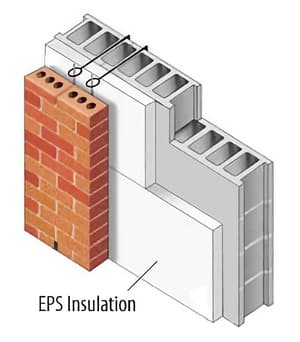
Simply by having your masonry contractor place EPS insulation blocks inside the cavities of the concrete block as they are installed you can increase the insulation for your concrete block wall by 12 times. Here is how it works.
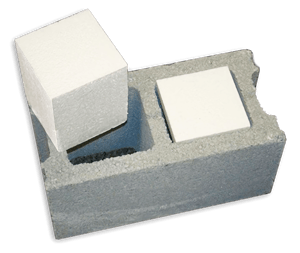
An 8" hollow concrete block (the type used for most concrete block walls) only has an R-Value of 1.11. EPS insulation blocks that are 5" thick have an R-value of R-20.5 or greater. Simply by placing the EPS blocks inside the concrete block voids while the foundation wall is being built, that R-1.11 insulation value for the block wall is turned into an average of R-13.53.
It is simple. It is inexpensive. And the best part is that the EPS insulation blocks are available from over 100 locations nationwide through Universal Foam Products, the innovator in energy reducing home insulation products.
If you are adding brick to your concrete block wall you can increase the insulation value by an additional R-4 by having your masonry contractor install EPS wall panels in the airspace between the block and the brick.
If your project requires that you use 10" or 12" concrete block your additional R-Value will be much greater. See the chart below. ``
| Block Size | Block R-Value | EPS Size | EPS R-Value | Blended R-Value |
|---|---|---|---|---|
| 8" Concrete Block | 1.11 | 5 x 5 x 7.625 | 20.85 | 13.53 |
| 10" Concrete Block | 1.2 | 5 x 7.25 x 7.625 | 27.91 | 17.83 |
| 12" Concrete Block | 1.28 | 5 x 9 x 7.625 | 34.65 | 21.92 |
Concrete Block Insulation Calculator
To get a budget price on your project you can use our online calculator or you can call Universal Foam Products and let one of our insulation professionals provide a custom quote.
Consult with your local building official prior to purchasing EPS insulation blocks. Blended R-Value was determined using the same method used by mechanical contractors to calculating heat loss when sizing HVAC equipment.
Laminate Options
1 Mil Polyethylene is applied to the EPS sheet where moisture is a concern. In an area where there is a high concentration of moisture in the soil, panels with 1 mil polyethylene, are typically used to provide a moisture barrier, The poly can be applied to one side or both sides of the panel.
Reflective Mylar is applied to panels where a higher R-Value is desired by reflecting heat back into a house. For the Mylar to be effective it should be facing towards the inside of the house and should be between 3/8' and 1' away any surface to allow the air to reflect back into the space.
FRP Laminated Panels are used for a variety of applications including walk-in coolers, clean rooms and public restrooms. The FRP (fiberglass reinforced panel) is a rigid, scrubable, fire resistant panel that is easy to maintain. EPS contributes insulation and sound deadening properties. Panels are available laminated on one side or both sides.
Roof Insulation
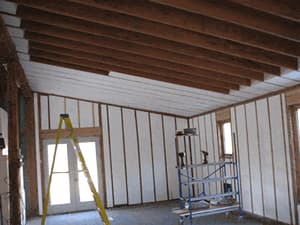
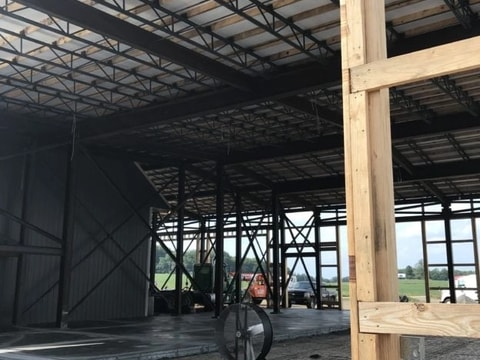
Expanded Polystyrene (EPS) is one of the leading materials used for roofing insulation in commercial buildings with flat roofs. It is typically used combining flat panels to establish the required R-Value, and tapered panels to channel the flow of water towards roof drains or scuppers. It can also be used in conjunction with other insulation materials, just to create the tapers, with the other flat materials creating the R-Value.
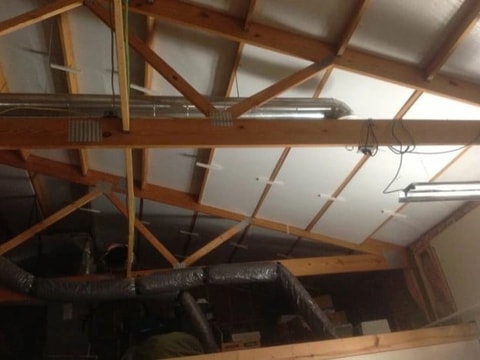
EPS is also used to retrofit existing commercial buildings with additional insulation. Due to its light weight and rigidity, EPS panels can easily be installed between trusses in an existing roof. Pieces can be pre-cut at the factory to accommodate the spacing of the trusses.
The panels are also used in residential construction with both gable and hip roofs. When a cathedral ceiling is required, EPS panels can be placed between the exposed tongue and groove finished ceiling and the OSB or plywood roof creating a well insulated and tight roof. This application is typically found in contemporary home and log home construction.
Tapered Insulation
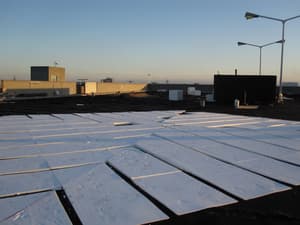
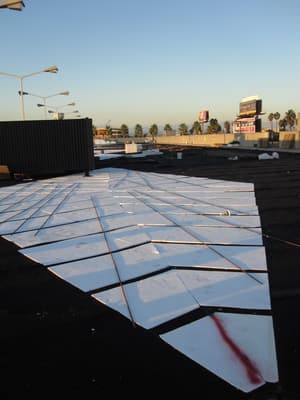
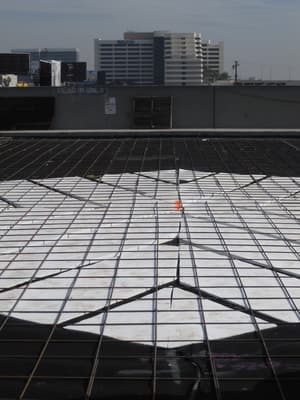
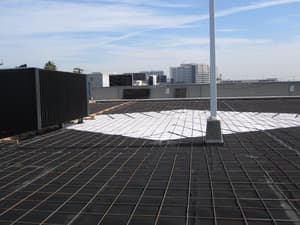
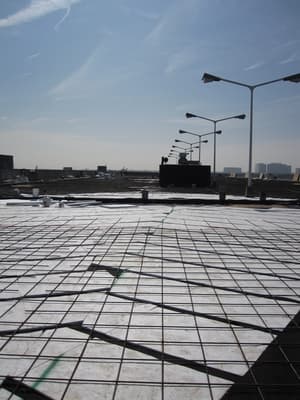
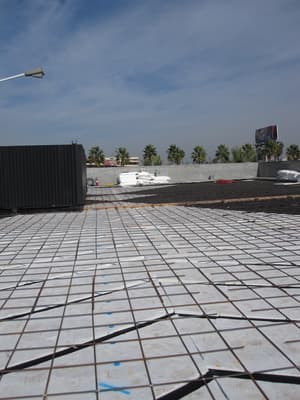
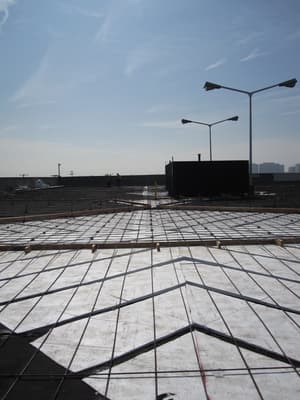
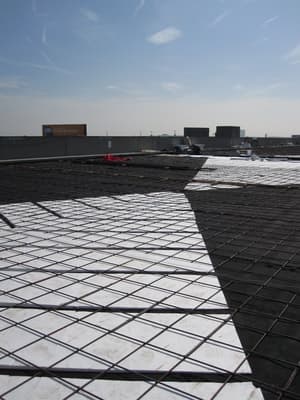
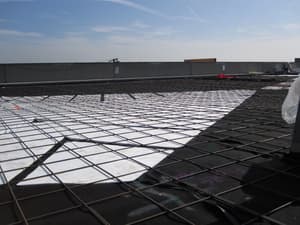
EPS is the most widely used tapered insulation on the market. The different densities available make it the best product to use under a standard roofing finish or a concrete slab. Even in roofing applications where polyisocyanurate is used for the roof insulation due to its higher R-Value, EPS is typically used to create the crickets because of its lower cost.
With the heavier densities of EPS, concrete can be installed over a continuous tapered area to provide proper drainage to a upper level parking deck. In the case of severely heavy loading, lightweight EPS tapers, used strictly as void fill, can be separated to allow for stem walls to be created supporting a structural slab. See the attached photos showing this application
Under Slab
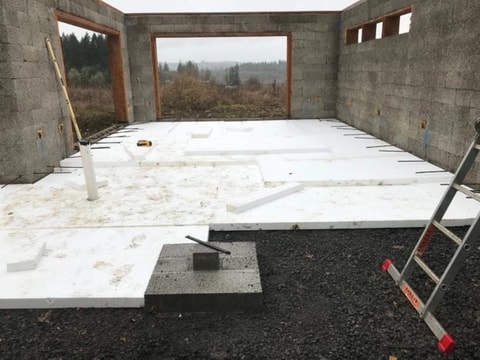
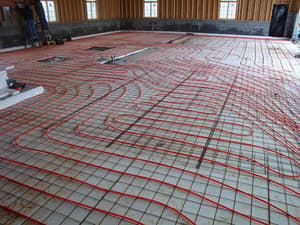
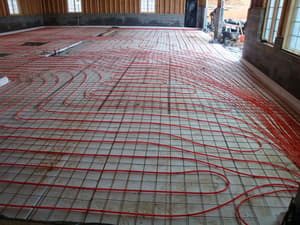
In areas with cold winters, EPS panels are used to insulate under slabs and the perimeter of foundations. Because EPS is available in a variety of different densities with different compression strengths, the material can accommodate any design load requirements from a residential basement to an industrial warehouse floor with concentrated loads. A typical application would be a floor with hydronic heating where insulating below the heat system is critical to its economical operation.
Wall Insulation
The reason EPS is such a good insulating material is the millions of air pockets which are formed when the blocks are molded. These pockets impede the flow of heat, making EPS an excellent insulator — keeping things cool in the summer and warm in the winter. High quality EPS wall insulation is available in a variety of sizes.
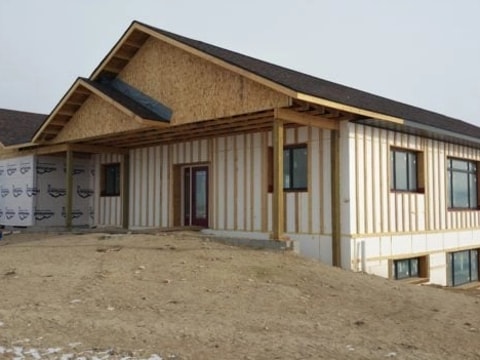
Sheets of EPS are used to insulate the inside or outside of foundations. The material can come into direct contact with the earth without any degradation over time. Sheets can be installed on the outside of wall framing or between the studs as is currently being done in areas where flooding has become routine. Unlike fiberglass insulation, EPS absorbs very little moisture and as soon as the source is removed will dry out completely and quickly.
Panels are available in thicknesses from 3/8" and up. They are available un-faced or laminated with 1-mil polyethylene film or metalized poly reflective film depending upon the application.